
India is globally recognized as the largest exporter of premium rice, especially aromatic Basmati varieties that dominate Middle Eastern markets. Among the top importing regions, the UAE (Dubai, Abu Dhabi, Sharjah) and Saudi Arabia (Riyadh, Jeddah, Dammam) stand out as high-consumption and high-value destinations. The demand for premium Indian rice in UAE and Saudi Arabia continues to grow due to population diversity, strong hospitality sectors, and preference for long-grain aromatic rice.
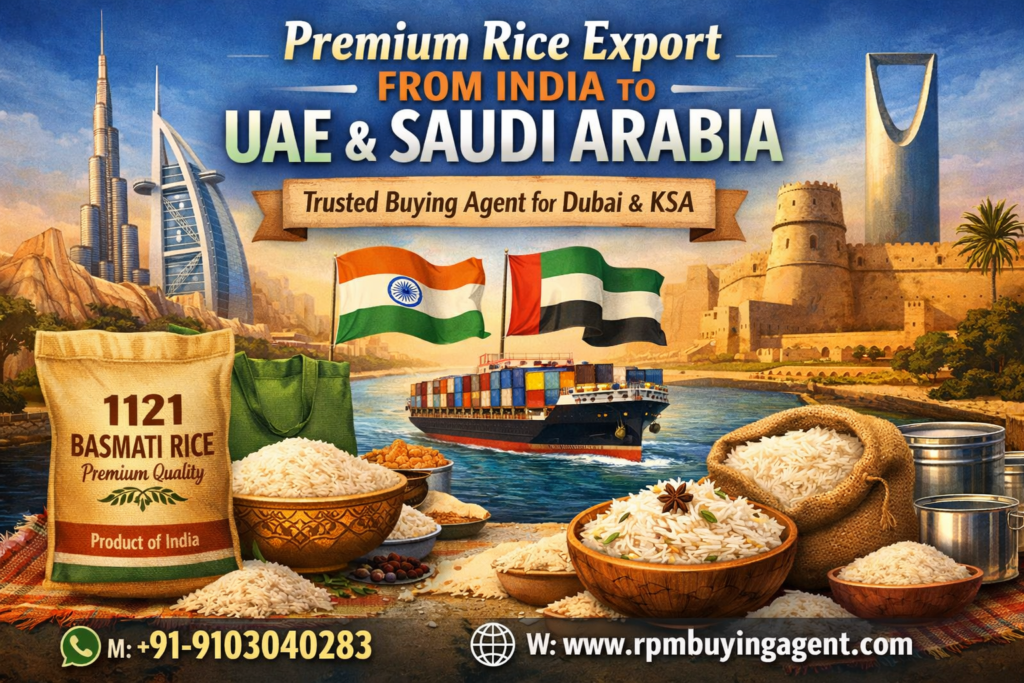
This article provides a complete SEO-focused guide on premium rice export from India to UAE and Saudi Arabia, covering varieties, quality standards, packaging, documentation, logistics, and buyer expectations.
Why India is the Preferred Source for Premium Rice in UAE & Saudi Arabia
India’s dominance in rice exports is driven by quality, consistency, and scalability. Exporters from India can fulfill both bulk commercial orders and retail-ready premium packaging, making Indian rice ideal for Gulf markets.
Key reasons Gulf importers prefer Indian rice:
- World-class Basmati rice varieties
- Strong aroma and extra-long grains
- Reliable year-round supply
- Competitive export pricing
- Advanced milling and polishing facilities
- Custom private-label packaging options
For importers in UAE and KSA, Indian suppliers provide a balance of premium quality and commercial feasibility.
Premium Rice Varieties Exported from India to UAE & Saudi Arabia
Choosing the right rice variety is critical for success in Gulf markets. The following varieties are most in demand:
1121 Basmati Rice
- Extra-long grain length
- Exceptional elongation after cooking
- Strong aroma and fluffy texture
- Ideal for biryani, mandi, and kabsa
- High demand in Dubai and Riyadh
1509 Basmati Rice
- Long grain with faster cooking time
- Cost-effective premium alternative
- Popular for bulk buyers and HORECA segment
1718 Basmati Rice
- Balanced aroma and texture
- Competitive pricing
- Suitable for wholesale distribution
1401 Basmati Rice
- Widely accepted export variety
- Consistent quality for large shipments
Aged Traditional Basmati Rice
- Naturally aged for enhanced aroma
- Premium positioning for retail brands
- Preferred by high-end buyers
Quality Standards for Premium Rice Export
UAE and Saudi buyers are quality-conscious. Exported rice must meet strict quality parameters to ensure repeat business and brand trust.
Key quality specifications include:
- Grain length and uniformity
- Moisture content (export standard)
- Broken percentage (1%–5% preferred)
- Cleanliness and low foreign matter
- Natural aroma (no artificial fragrance)
- Consistent color and polish
- Proper aging (especially for premium segment)
Providing samples, lab test reports, and inspection videos helps build buyer confidence.
Packaging Options for UAE & Saudi Arabia Markets
Packaging plays a vital role in shelf life, logistics safety, and brand positioning.
Common packaging sizes:
- Retail packs: 1kg, 2kg, 5kg
- Bulk packs: 10kg, 20kg, 25kg, 40kg, 50kg
Packaging materials:
- BOPP laminated bags (premium retail look)
- PP woven bags (export-durable)
- Non-woven fabric bags
- Custom private-label packaging
Labeling requirements:
- English & Arabic text
- Product name and variety
- Net weight and batch number
- Country of origin (India)
- Importer details (as per regulations)
Documentation Required for Rice Export from India to UAE & Saudi Arabia
Accurate documentation ensures smooth customs clearance and timely delivery.
Standard export documents include:
- Commercial Invoice
- Packing List
- Bill of Lading
- Certificate of Origin
- Phytosanitary Certificate
- Fumigation Certificate (if required)
- Insurance documents
- Quality or inspection certificate (optional but recommended)
Consistency between documents and packaging labels is critical.
Shipping & Logistics for Gulf Countries
Rice exports from India to UAE and Saudi Arabia are primarily done via sea freight, ensuring cost-effective and safe transportation.
Major Indian ports:
- Mundra
- Nhava Sheva (JNPT)
- Kandla
- Chennai
Destination ports:
- UAE: Jebel Ali (Dubai), Abu Dhabi
- Saudi Arabia: Jeddah Islamic Port, Dammam Port
Container options:
- 20-foot container for medium shipments
- 40-foot container for large volumes
Professional exporters ensure moisture control, container hygiene, and proper stuffing methods.
Pricing Strategy for Premium Rice Export
Pricing depends on:
- Rice variety and aging
- Quality grade and broken percentage
- Packaging type
- Order volume
- Market demand in UAE or KSA
Successful exporters focus on value-based pricing, offering consistent quality rather than short-term low prices.
Buyer Types in UAE & Saudi Arabia
Understanding buyer categories helps exporters tailor offers effectively.
UAE buyers:
- Food trading companies
- Supermarket suppliers
- Wholesale distributors
- Hotel and catering suppliers
- Online grocery platforms
Saudi Arabia buyers:
- National distributors
- Wholesale food companies
- HORECA suppliers
- Private rice brand owners
Each segment requires customized packaging, pricing, and documentation support.
Building Long-Term Export Business in UAE & KSA
To succeed in premium rice export from India:
- Maintain consistent quality across shipments
- Communicate transparently with buyers
- Provide timely documentation
- Offer private labeling support
- Ensure reliable shipping schedules
Trust and consistency lead to repeat orders and long-term contracts.
Conclusion
The premium rice export market from India to UAE and Saudi Arabia offers strong growth opportunities for exporters who prioritize quality, compliance, and buyer relationships. With globally preferred Basmati varieties like 1121, 1509, 1718, and 1401, India remains the top sourcing destination for Gulf importers.
By focusing on export-grade quality, professional packaging, and transparent trade practices, exporters can build a profitable and sustainable presence in Dubai and Saudi Arabian markets.export from India to UAE and Saudi Arabia can become a stable and high-profit business channel.
